GLOW is an immersive, game-based VR experience designed to make complex health information accessible, tangible, and empowering. By combining culturally grounded storytelling with interactive exploration inside the body, the experience supports understanding, agency, and treatment adherence. Developed in collaboration with an Indigenous health department, GLOW demonstrates how immersive technology can support health education with care, respect, and impact.



Health education often relies on abstract explanations, printed materials, and clinical language that can feel distant from lived experience. For individuals and communities facing systemic barriers to healthcare, these approaches can be especially difficult to engage with, particularly when the subject matter carries stigma or fear.
Conditions like hepatitis C are frequently discussed in terms of statistics and outcomes rather than personal agency and understanding.
This can leave people feeling disconnected from their own health journey.
The challenge was to create an experience that could translate complex medical information into something tangible, approachable, and empowering while remaining culturally respectful and emotionally grounded.
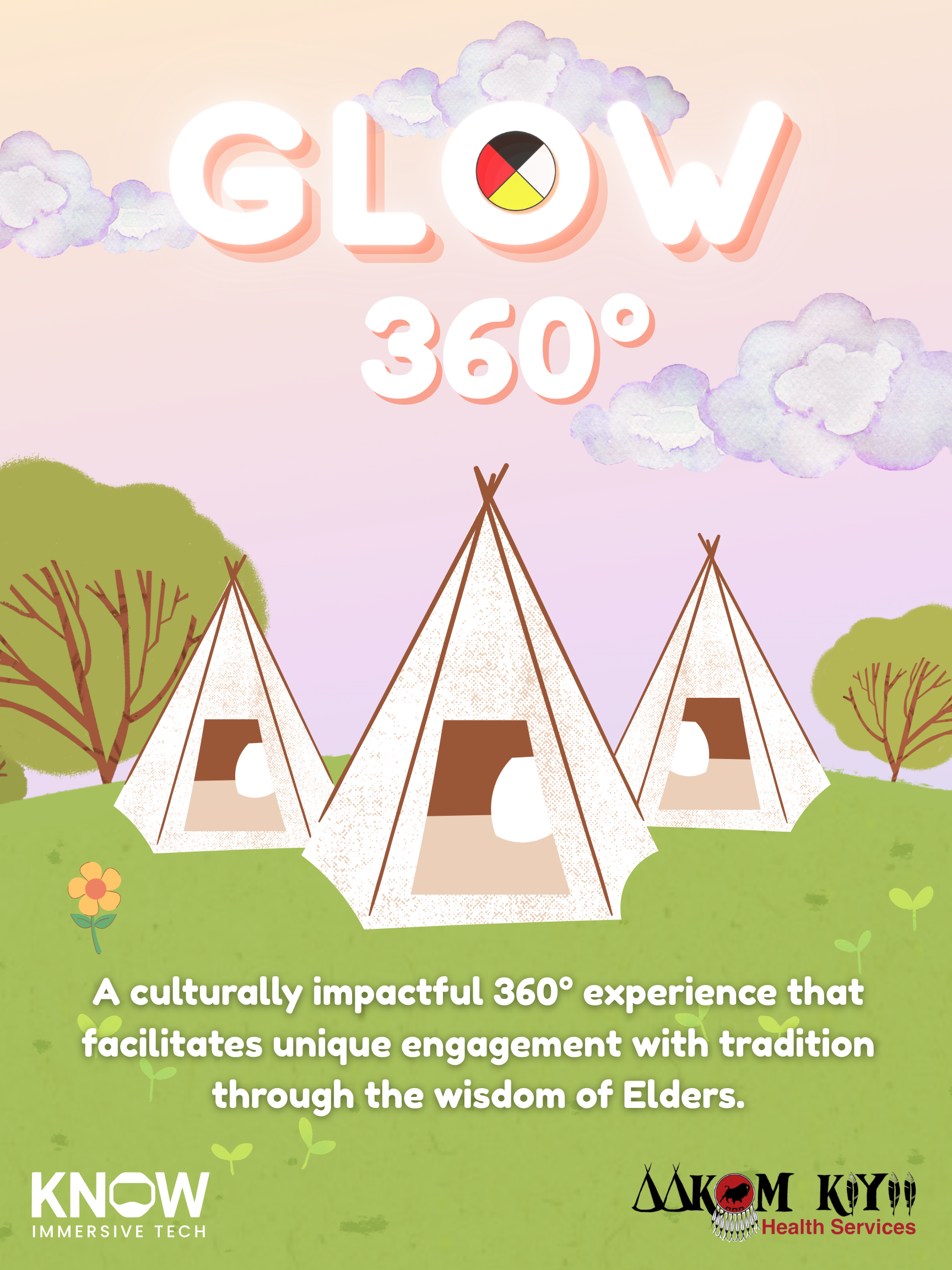
The experience begins with interactive storytelling set within a familiar and culturally relevant landscape, grounding participants in a space that feels safe, recognizable, and personal.
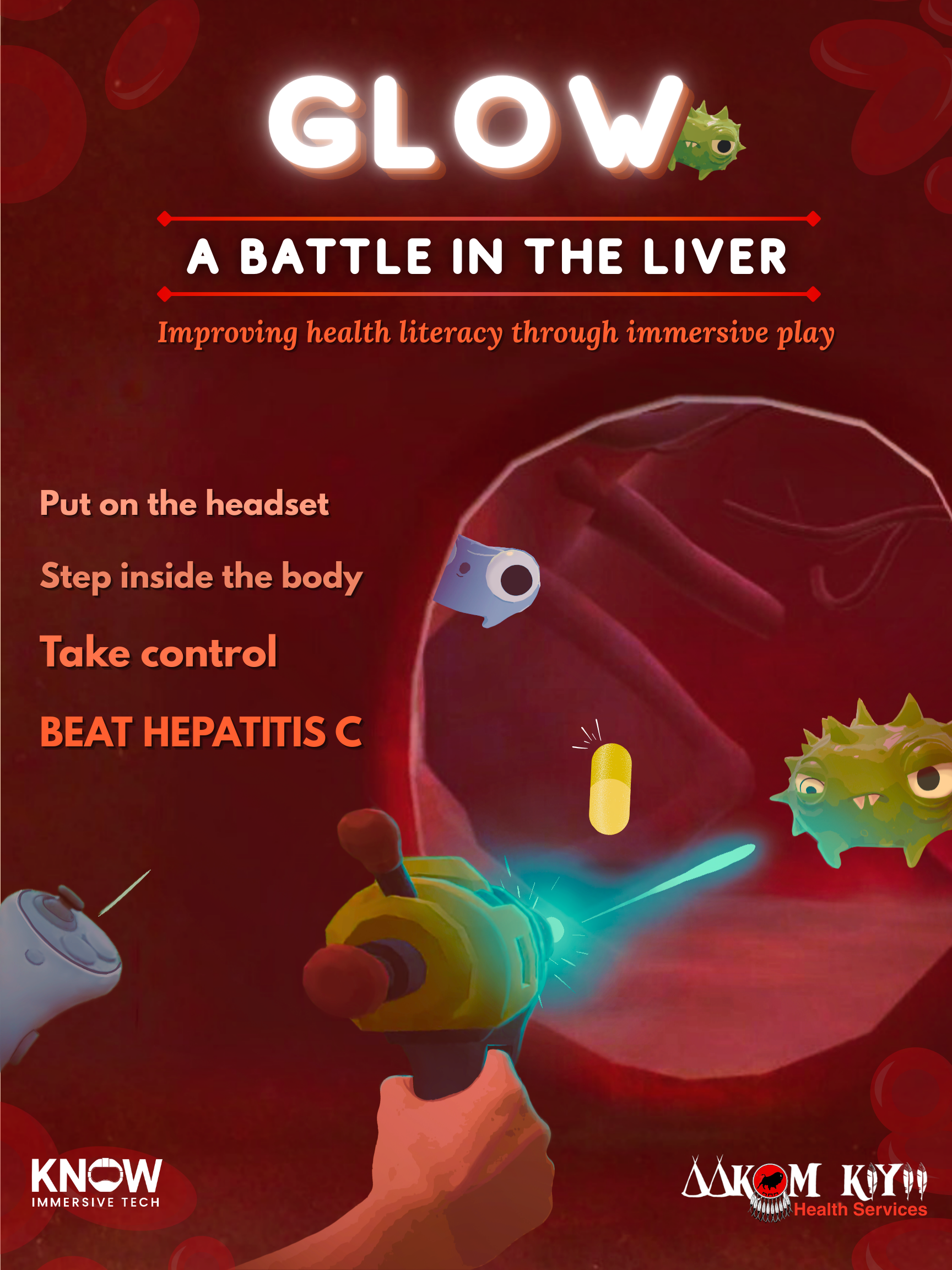
From there, participants are transported inside the body where they engage in an interactive gameplay sequence within the liver.
Rather than positioning users as passive observers, GLOW invites them to actively confront the hepatitis C virus.
Progress, however, depends on more than action alone.
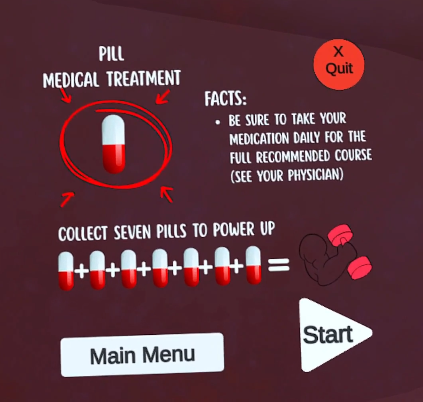
Participants must collect weekly medication doses to strengthen their ability to defeat the virus, reinforcing the importance of treatment adherence as a core part of care.
By combining narrative, visual immersion, and hands-on interaction, GLOW transforms an abstract medical concept into an experience that can be seen, felt, and understood.
The design balances clarity and engagement without overwhelming the participant.
Learning happens through experience rather than instruction.
Participants often describe a clearer understanding of how the condition affects the body and why consistent treatment matters.
At its core, GLOW supports agency over one’s health journey.
By reducing stigma and presenting information in an accessible, experiential way, the experience empowers participants with knowledge, confidence, and a greater sense of control over their care.
GLOW was developed in collaboration with an Indigenous health department that demonstrated forward-thinking leadership and a willingness to explore innovative approaches to health education.
Their openness to immersive technology reflects a commitment to meeting community members where they are.
Using culturally meaningful tools to support understanding, engagement, and empowerment.